Pruning-hedge-maintenance-gta: Pruning & Hedge Maintenance GTA Guide
By My Landscapers Inc. Editorial Team · Updated 2026-07-18
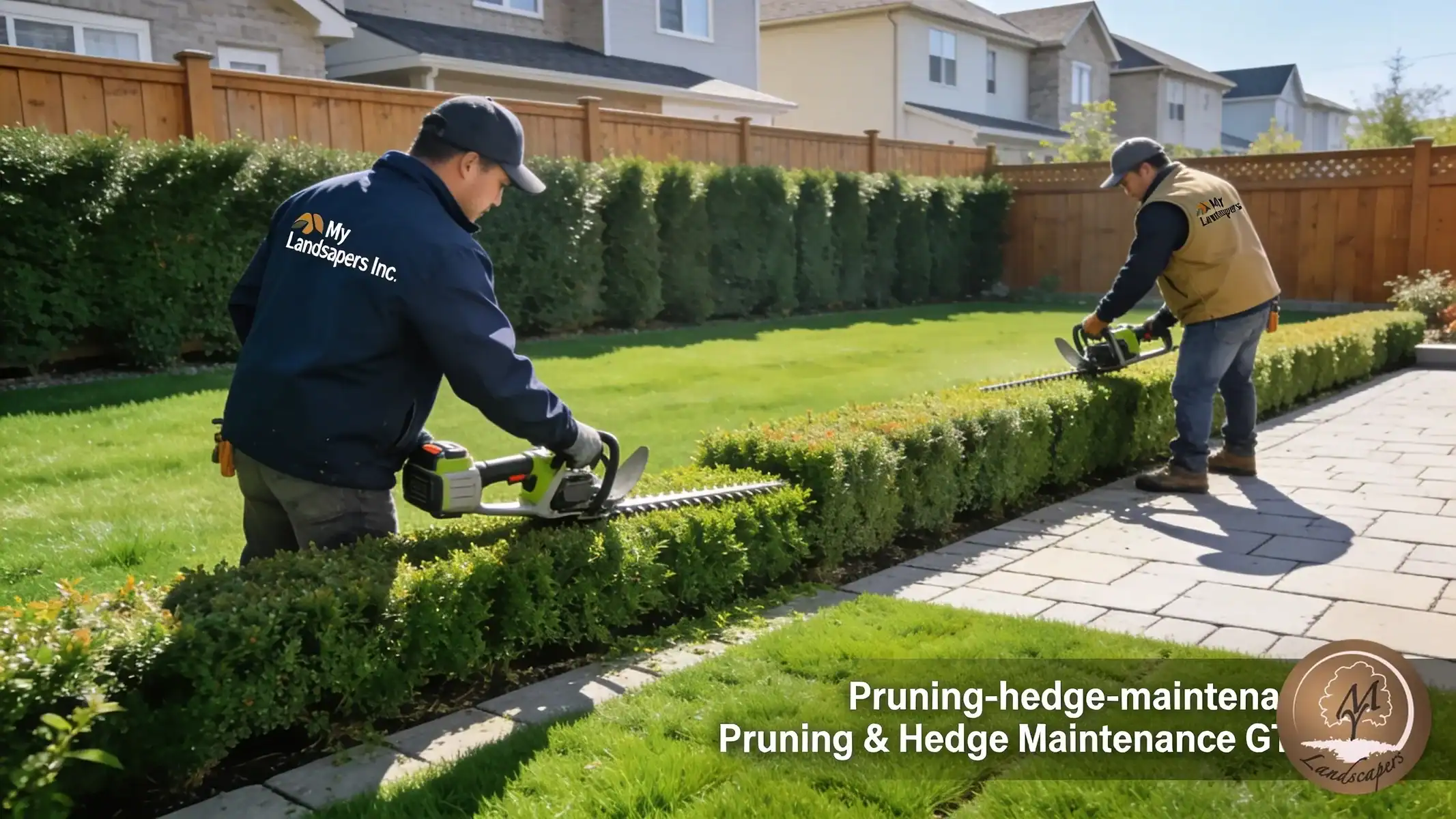
For pruning-hedge-maintenance-gta, proper pruning and hedge maintenance requires removing dead, damaged. Crossing branches at a 45-degree angle just above a healthy bud, ensuring clean cuts with sharp tools. My Landscapers Inc., serving Thornhill and surrounding areas, recommends scheduling major hedge trimming twice yearly. Once in spring and once in late summer — for optimal plant health and shape.
Proper pruning and hedge maintenance requires regular trimming, correct tool selection, and attention to plant shape. Formal hedges perform best with a apartment-top design, as recommended for species like privet (Ligustrum spp.). My Landscapers Inc. serves Thornhill and surrounding areas with expert hedge care year-round.
Proper pruning and hedge maintenance keeps leafy borders healthy, shapely, and structurally sound year-round. Both evergreen and deciduous species — including fast-growing privet — require regular trimming to hold a pleasing form. A apartment-topped profile suits formal hedges best. Rounded shapes perform better in snow-prone regions, preventing branch damage under seasonal weight.
Key Takeaways
-
Regular pruning keeps hedges healthy and shapely, requiring consistent attention throughout growing seasons.
-
Formal boxwood hedges and informal flowering shrubs need different pruning techniques for optimal results.
-
My Landscapers Inc. serves Thornhill and surrounding areas with expert hedge maintenance year-round.
-
Proper planning during planting stages establishes foundations for successful long-term hedge maintenance.
What tools and timing do you need first?
Proper equipment and a consistent schedule form the foundation of effective pruning and hedge maintenance work. Having the right tools produces cleaner cuts, and cleaner cuts directly support plant health by reducing the risk of disease entry at wound sites.
Many hedge species common across GTA properties — including cedar (*Thuja occidentalis*), privet (*Ligustrum* spp.), and boxwood (*Buxus sempervirens*) — grow rapidly during Ontario’s spring and summer flush. Without regular pruning, that fast growth produces uneven, weak structure that is difficult to correct later.
Prerequisites before starting:
-
Sharp bypass hand shears for light, precise trimming
-
Long-handled hedge shears or a powered hedge trimmer for larger sections
-
Loppers for thicker woody stems (anything over 1.5 cm in diameter)
-
Safety gloves and eye protection
-
A disinfectant solution (10% bleach or 70% isopropyl alcohol) for wiping blades between plants to prevent disease transmission
When is the best time to prune hedges?
Timing depends on the hedge species and its growth rate. For most GTA hedges, the two best windows are late May to early June (after the first growth flush) and late August to early September (before woody stems harden for winter). Fast-growing varieties like privet may need a third light trim mid-summer. Avoid pruning in late fall once temperatures regularly drop below 5°C — new growth stimulated by a late cut will not harden before frost and is likely to die back.
How do tools affect hedge health?
Dull or damaged blades crush stems rather than cutting cleanly, leaving ragged wounds that invite pests and disease. Keeping blades sharp and clean between uses is a non-negotiable step in responsible hedge maintenance. For properties with multiple hedge varieties, wiping blades between shrubs is equally important — fungal pathogens like boxwood blight spread readily on contaminated tools.
Homeowners and property managers across the GTA — from Toronto and North York to Vaughan, Markham, and Mississauga — rely on the professionals at My Landscapers Inc. to handle equipment selection and scheduling correctly from the start.
How do you prune and shape hedges correctly?
Correct hedge pruning combines the right cutting angle with consistent timing to keep shrubs healthy and well-defined. Neglecting this process causes hedges to become overgrown, producing bare patches, weak growth, and increased vulnerability to pests and diseases — outcomes that cost far more time and money to reverse than to prevent.
Hedge pruning professionals follow a clear sequence to achieve clean, lasting results. Before starting, confirm that cutting tools are sharp and clean to avoid tearing stems or spreading disease between plants.
Prerequisites: Sharp bypass shears or hedge trimmers, a taut guide string for level cuts, and protective gloves.
-
Assess the overall shape before making any cuts. Identify which branches are crossing, dead, or extending beyond the desired outline.
-
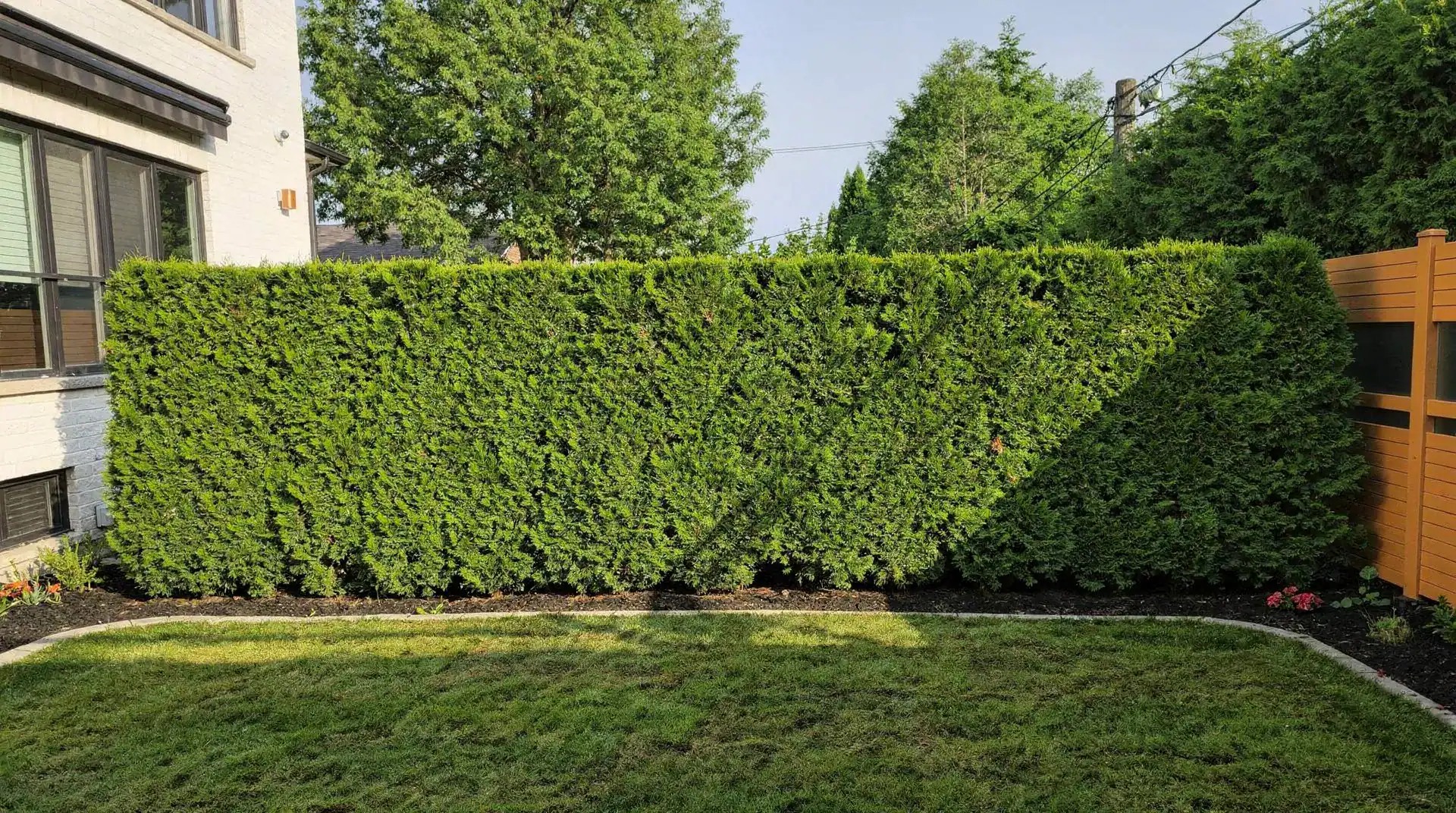
Establish the base width first. The base of the hedge must remain wider than the top so sunlight reaches the lower foliage — a tapered silhouette, not a vertical wall.
-
Cut the sides at an outward slope, working upward from the base to the crown.
-
Trim the top last, keeping the crown narrower than the base to allow light penetration throughout the plant.
-
Remove all clippings from around the base to reduce disease pressure.
Why does the top of a hedge need to be narrower than the base?
Shaping the top narrower than the base allows sunlight to reach foliage at the lower sections of the shrub. Without this taper, lower branches lose light, weaken, and eventually die back — a common and irreversible mistake on mature hedges that creates bare, leggy bases.
How does pruning improve shrub health?
Thinning branches increases air circulation and allows foliage to dry faster after rain, directly reducing fungal disease pressure across the entire plant. In the GTA, where humid summer conditions promote powdery mildew and leaf spot on common hedge species like cedar (Thuja occidentalis), boxwood (Buxus sempervirens), and privet (Ligustrum spp.), this airflow benefit is especially significant. My Landscapers Inc. — with over 14 years serving GTA properties — reinforces that keeping hedges at a manageable size also simplifies long-term maintenance, preventing the cycle of drastic corrective cuts that stress established shrubs.
How do you maintain hedge health after pruning?
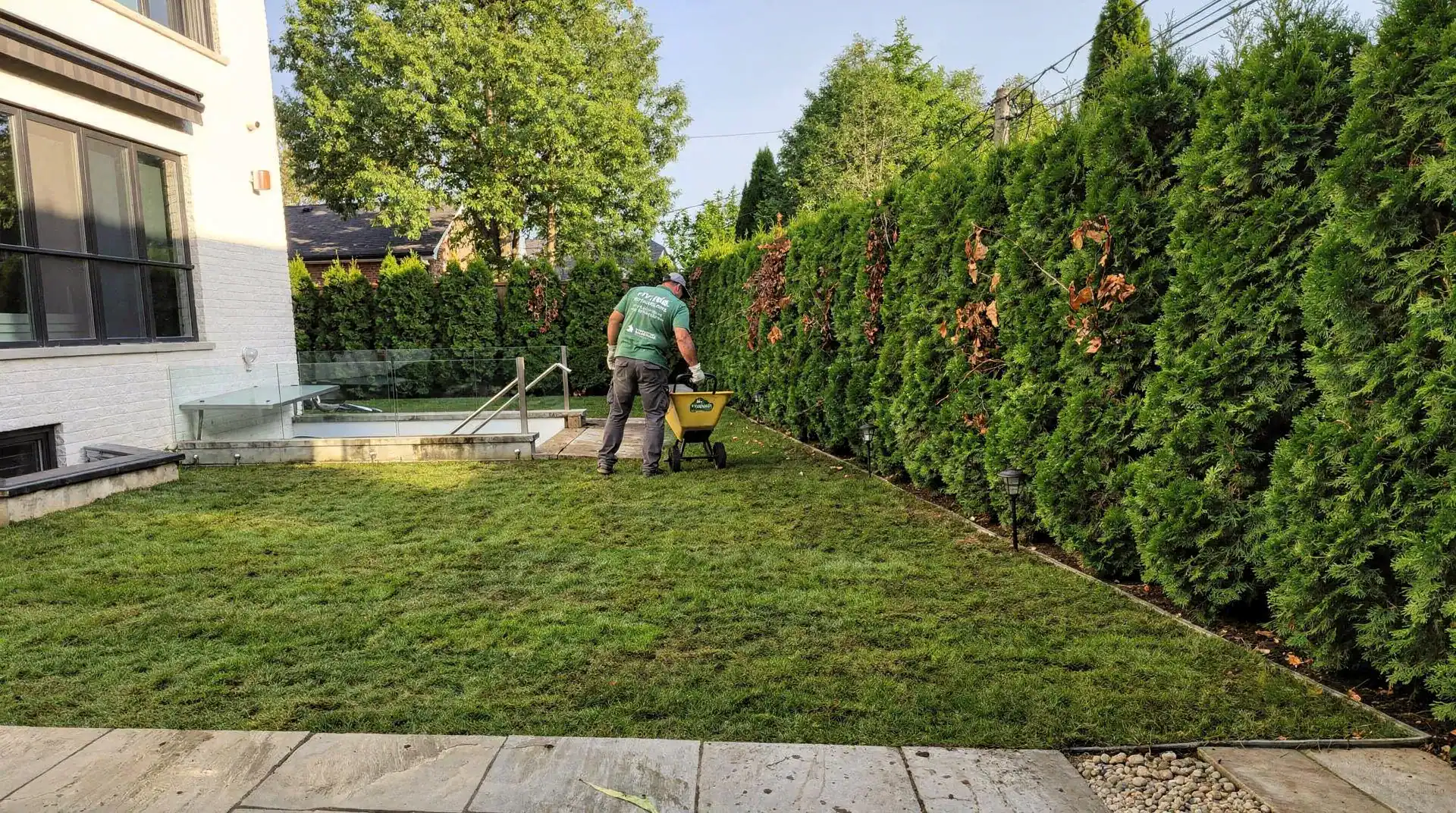
Maintaining hedge health after pruning requires consistent fertilizing, vigilant pest monitoring, and timely seasonal care. Soil quality varies significantly across GTA properties — clay-heavy soils common in North York and Vaughan drain poorly and compact easily, while the sandier loam found in parts of Thornhill and Markham drains faster but holds fewer nutrients. Both conditions affect how quickly a hedge rebounds after pruning.
Does soil quality affect how hedges recover after pruning?
Variations in soil quality directly influence how quickly a hedge rebounds. Nutrient-depleted soil slows recovery and leaves shrubs vulnerable to stress. Applying a slow-release, balanced fertilizer (such as a 10-10-10 or species-specific formulation) after pruning gives the plant the resources needed to push healthy new growth. For GTA homeowners, a soil test every two to three years helps identify specific deficiencies — particularly nitrogen depletion under fast-growing species like cedar and privet — and guides fertilizer selection more precisely than guesswork.
What should property owners watch for once pruning is complete?
Gaps in the hedge canopy and discolored or diseased leaves are early warning signs that demand quick action. In the GTA, two of the most common post-pruning threats are boxwood blight (*Calonectria pseudonaviculata*) — which spreads rapidly in wet, warm conditions — and the Emerald Ash Borer, which affects ash-adjacent plantings. Simple protective measures resolve most pest or disease problems before they spread, but only if property owners catch them early. Delayed response turns a minor issue into significant hedge loss.
Follow these post-pruning steps:
-
Apply fertilizer suited to the hedge species and local soil conditions.
-
Inspect foliage weekly for gaps, discoloration, or pest activity.
-
Act immediately at the first sign of disease or infestation.
-
Schedule a local lawn mowing and yard cleanup service each spring and fall to remove debris that harbors pests.
My Landscapers Inc. supports clients through ongoing maintenance programs, shrub pruning visits, and seasonal cleanups — all backed by transparent pricing and guaranteed satisfaction. Property managers seeking reliable hedge care solutions can contact the team directly for a free estimate.
FAQ
When is the best time to prune fast-growing hedges?
Fast-growing varieties require pruning more than once per season, and trimming during active growth periods encourages dense, even regrowth.
Why do dull blades harm hedges?
Dull or damaged blades crush stems instead of cutting cleanly, leaving ragged wounds that invite pests and disease into the plant.
What shape suits hedges in snow-prone regions?
Rounded shapes perform better in snow-prone regions, preventing branch damage under seasonal weight, while apartment-topped profiles suit formal hedges best.